Search Icon
Opcije pristupačnosti Pristupačnost

Jean Monnet Chair "Active European Democratic Citizenship for Resilient Society"

About the project

The project addresses the challenges of low awareness and involvement of Croatian citizens in European Citizen Initiatives and EC public consultations on draft EU policies, as well as the lack of academic research, teaching and public debates about those challenges. It aims to promote excellence in teaching and research on active European democratic citizenship and strengthen the understanding of how the EU works as a precondition for active citizen engagement in EU policymaking. Given the low trust of Croatian citizens in the EU institutions and trends of disinformation about the EU, the project aims to contribute to the societal resilience to democratic backsliding tendencies and growing threats to fundamental European values.

By combining innovative teaching methods, students’ community engagement, research, and multi-stakeholder public debates, the project will enhance the active European citizenship competencies among students of political science and journalism at the Faculty of Political Science of the University of Zagreb and encourage them to share their knowledge about the EU among Croatian citizens. Through conducting communication campaigns on European citizen initiatives and EC public consultations and through participating in a simulation of negotiations on selected EU legislative files, students will develop their critical thinking skills and learn how to actively engage in European democratic life. Various events on active citizen engagement in EU policymaking will be organized to mobilise the participation of representatives of the academic community, civil society, media, and business, as well as local, state and EU-level policymakers. Drawing on the empirical evidence gathered during the project, a series of research papers will be published and the findings widely disseminated. The project should provide an impetus to increasing the number of Croatian citizens participating in European citizen initiatives and EC public consultations. The duration of the project is from September 2023 until September 2026.

Key staff members from the Faculty



Jean Monnet Chair Holder

 Igor Vidačak, PhD, Full Professor

 Kontakt: 



 Mario Munta, PhD, Associate Professor

 Kontakt: 



 Ana Matan, PhD, Associate Professor

 Kontakt


You can access the project's Facebook page by clicking on the link.



13.01.2026

Panel discussion on regulating lobbying for better democratic governance in Croatia

Panel discussion on regulating lobbying for better democratic governance in Croatia

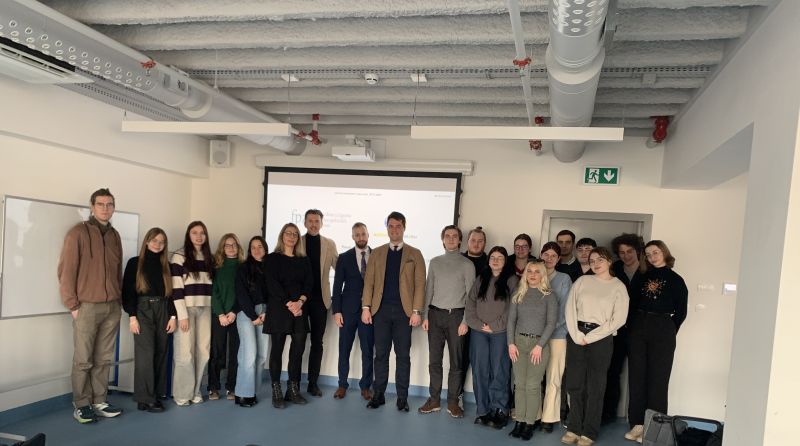
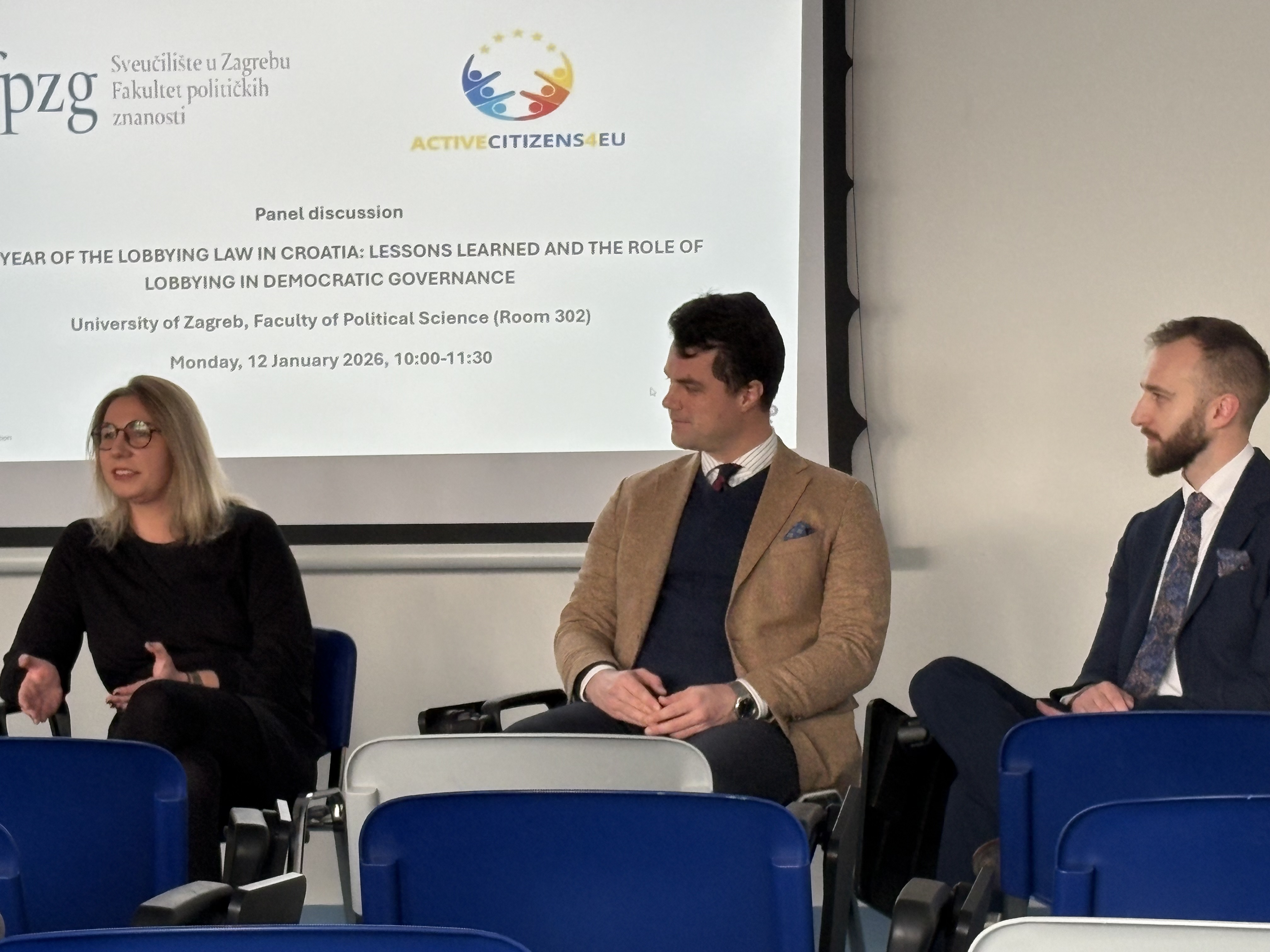
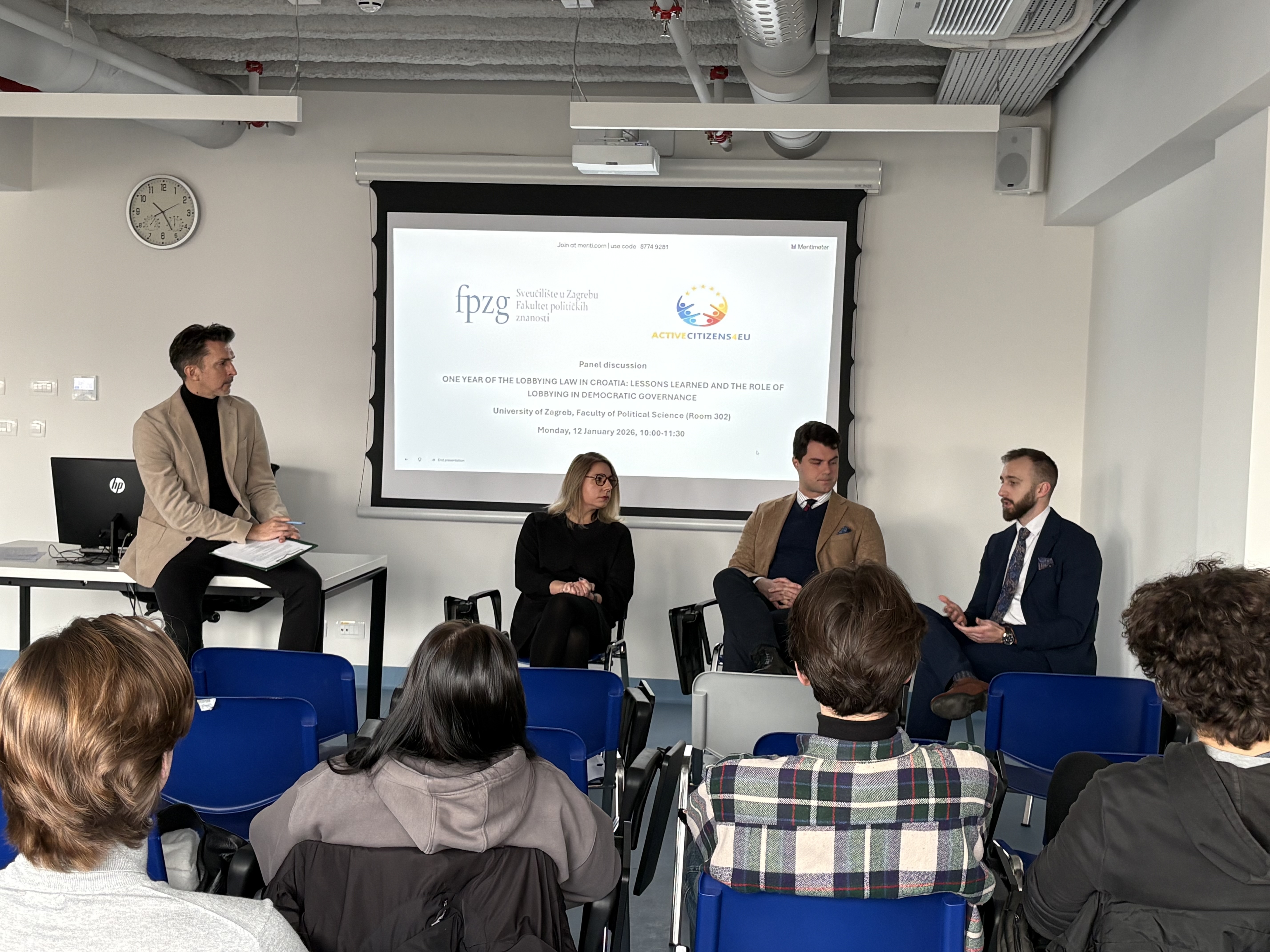
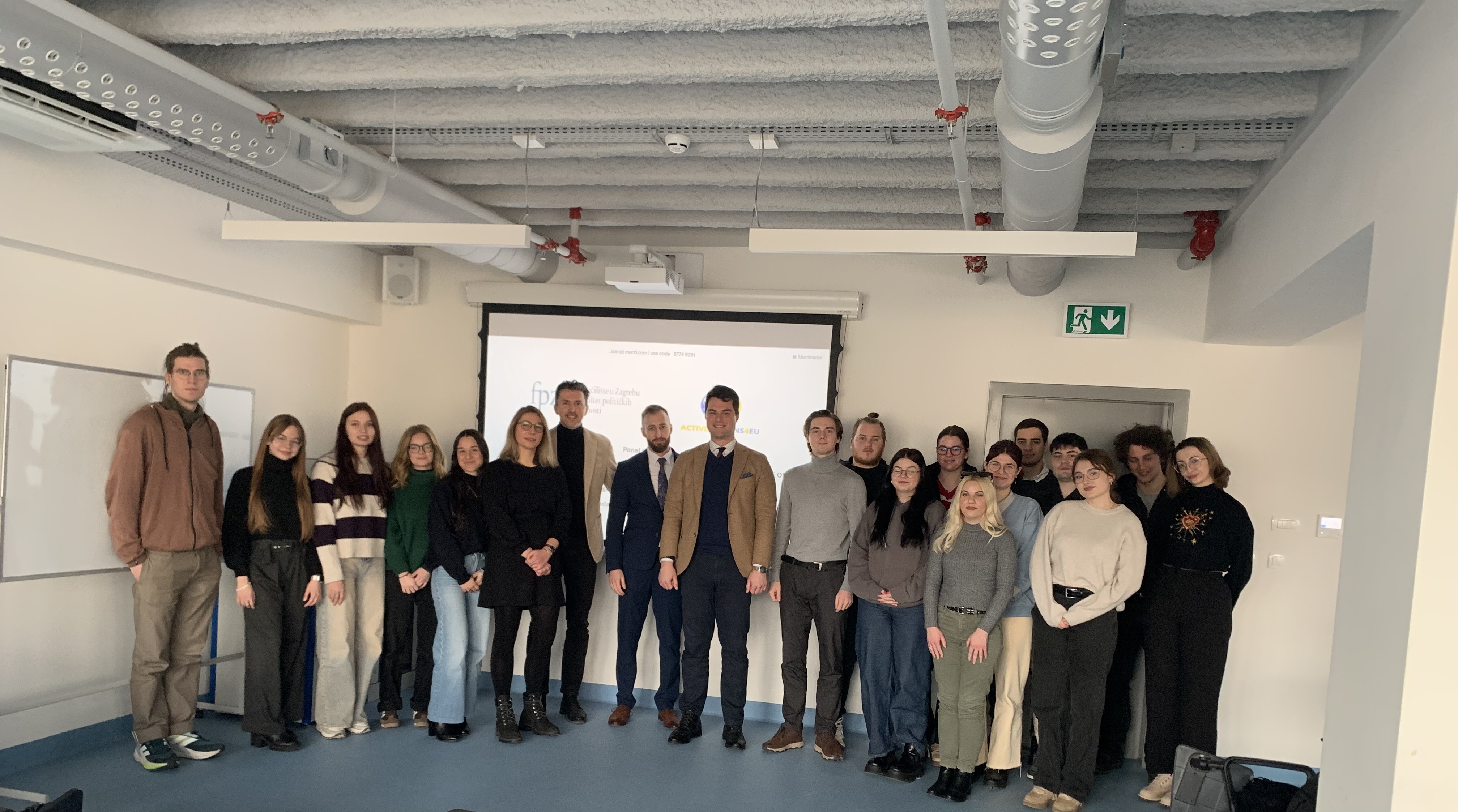
On Monday, 12 January 2026, a panel discussion entitled “One Year of the Lobbying Law in Croatia: Lessons Learned and the Role of Lobbying in Democratic Governance” was held at the University of Zagreb Faculty of Political Science.

The discussion focused on assessing the practical impact of the Croatian Lobbying Act one year after its entry into force, examining early implementation experiences, and exploring future trends in democratic governance, professional lobbying, and public affairs standards in Croatia and the wider EU context. The event brought together students attending the course “Interest Groups and Lobbying in the European Union”, along with other representatives of civil society organisations and the business community.

The panel included Sanja Pavić, Legal Advisor at GONG, Fabijan Popović, Senior Public Policy Manager, Adria (HR & SI) at Bolt, and Tomislav Vidović, Policy Officer at AmCham Croatia.

During the discussion, panellists agreed that while the Register of Lobbyists is publicly available and the number of registered entities has increased, the primary objective of the law - to enhance transparency in decision-making - has not yet been fully achieved. Several implementation challenges were highlighted, including the non-public nature of lobbying activity reports, the absence of publicly accessible information on contacts between lobbyists and decision-makers, and the continued presence of unregistered lobbying activities. These challenges were linked to limited incentives for registration, additional administrative burdens, and concerns regarding the proportionality of sanctions.

The discussion further emphasised that meaningful progress in transparency requires shared responsibility between lobbyists and public officials, particularly regarding the disclosure of meetings and interactions. Reference was also made to EU-level transparency mechanisms as potential points of comparison for future improvements.

Overall, the panel confirmed the importance of continued dialogue on lobbying regulation as part of broader discussions on democratic governance, transparency, and public trust. Students actively participated in the exchange, and the panellists contributed diverse and experience-based perspectives on both the challenges and possible directions for further development of the regulatory framework.

The discussion was moderated by Igor Vidačak, Professor at the Faculty of Political Science, and took place within the framework of the EU-funded Jean Monnet Chair project “Active European Democratic Citizenship for Resilient Society.”


Popis obavijesti