


 Pristupačnost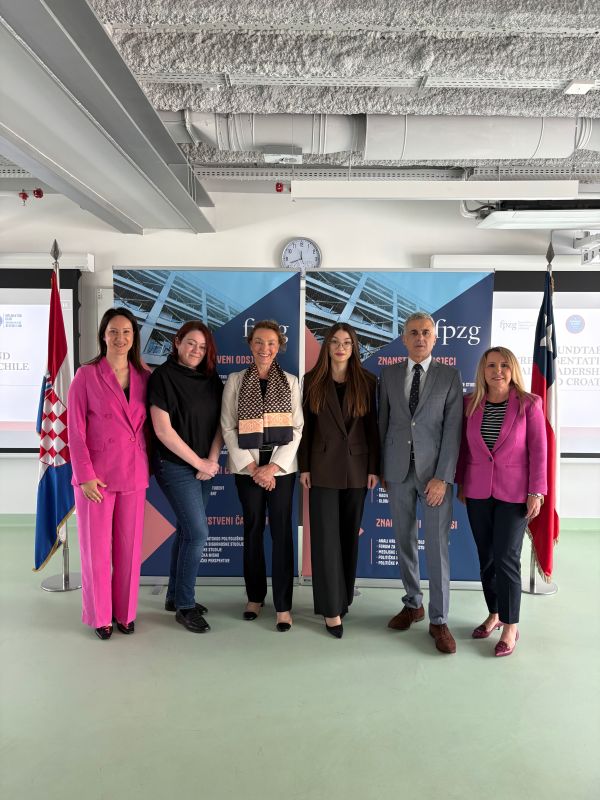
ROUNDTABLE DISCUSSION
“REPRESENTATION AND FEMALE LEADERSHIP IN CHILE AND CROATIA”
5/5/2026
Faculty of Political Science
Na Fakultetu političkih znanosti Sveučilišta u Zagrebu 5. svibnja 2026. održan je okrugli stol pod nazivom „Representation and Female Leadership in Chile and Croatia “, zamišljen kao prostor susreta akademske refleksije i diplomatskog dijaloga o političkom vodstvu žena kao ključnoj dimenziji suvremene demokracije.
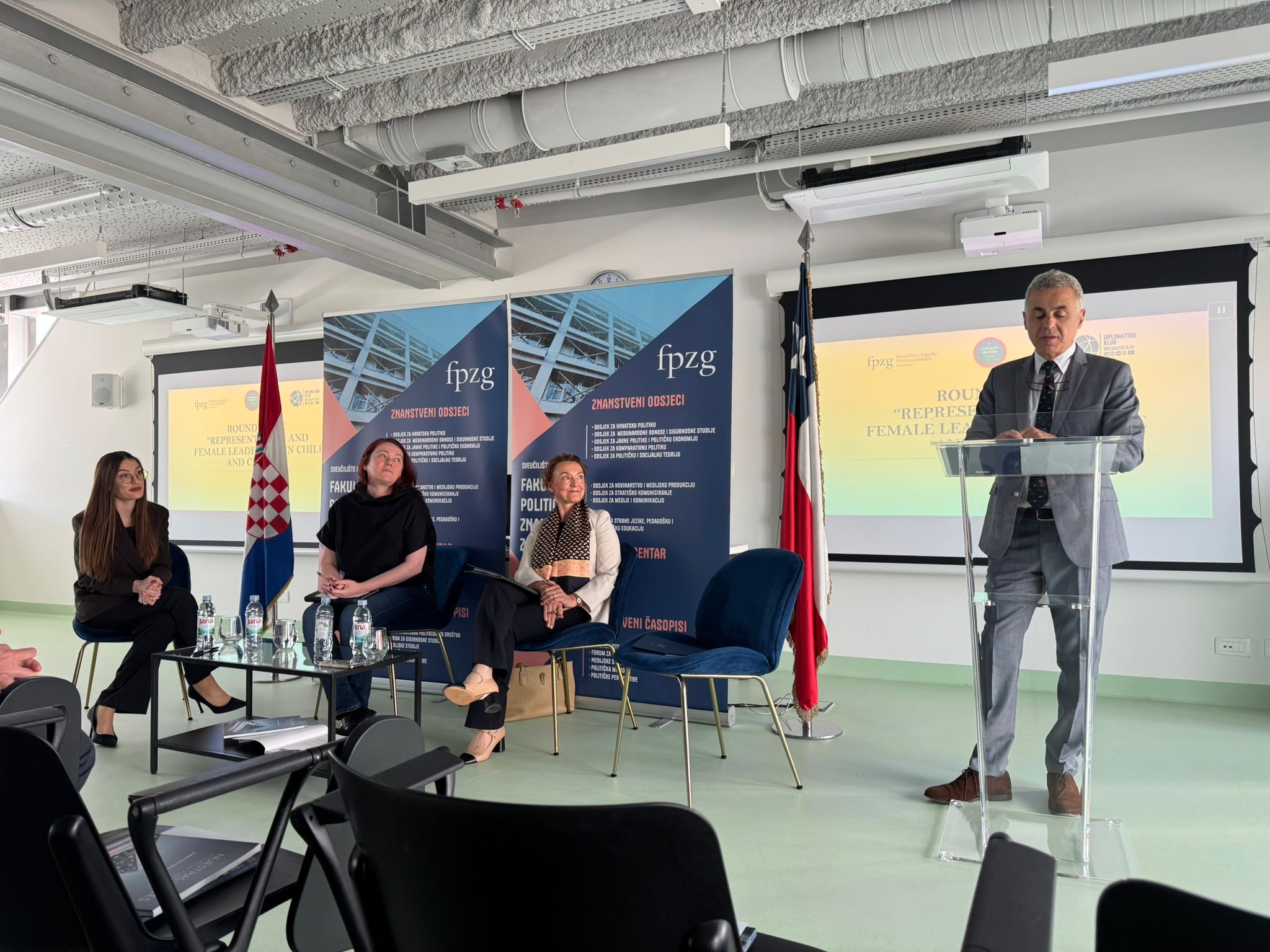
Događaj je otvorio dekan Fakulteta, prof. dr. sc. Dario Nikić Čakar uz naglasak na važnost kontinuiteta organizacije programa koji usmjeravaju pozornost na relevantne društvene i institucionalne teme. U uvodnom obraćanju, Nj. E. Rodrigo Donoso, veleposlanik Čilea u Republici Hrvatskoj naglasio je da razmjena iskustava između država poput Čilea i Hrvatske nije samo usporedba, već doprinos kritičkom promišljanju učinkovitih i uključivih javnih politika.
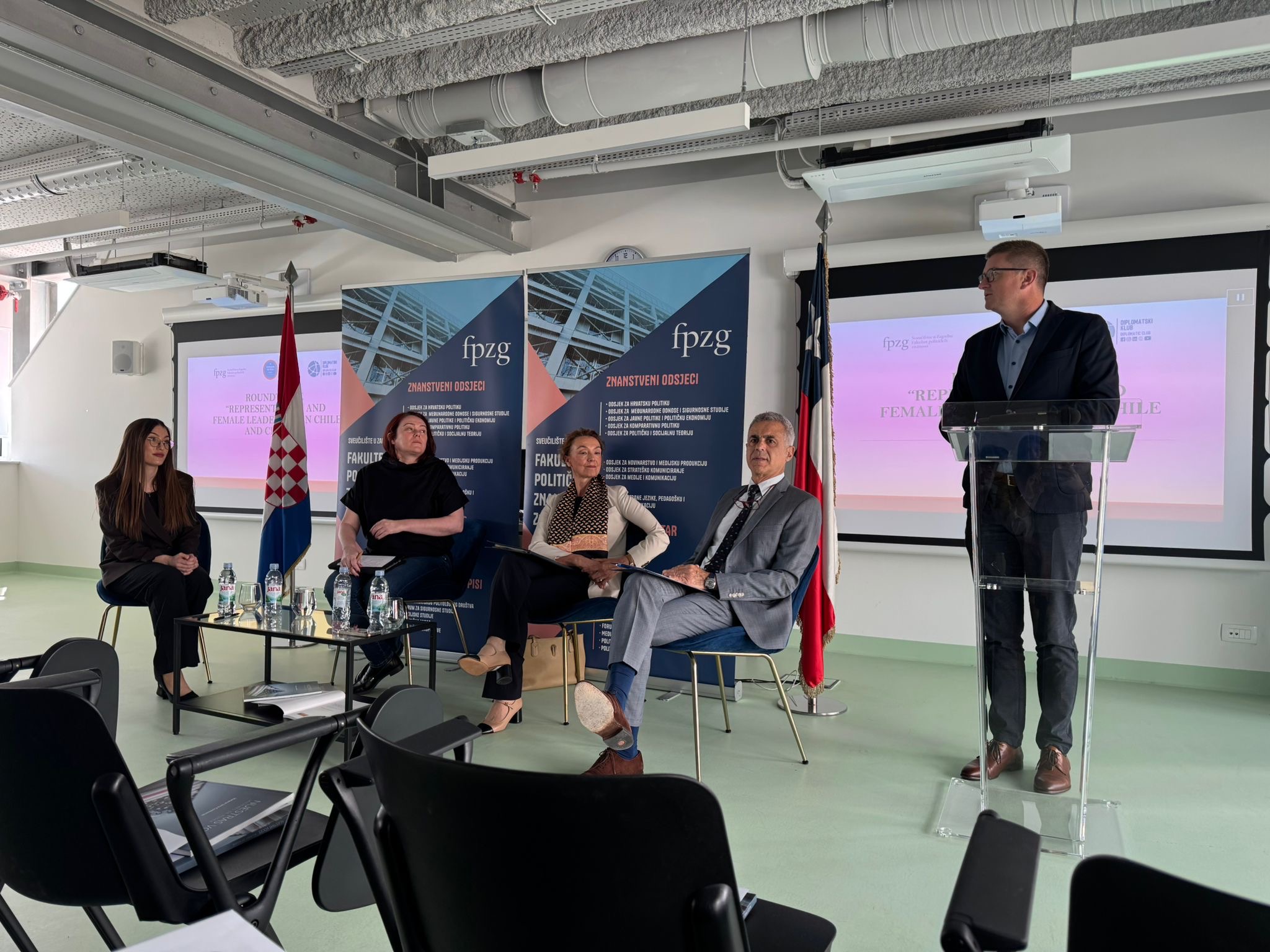
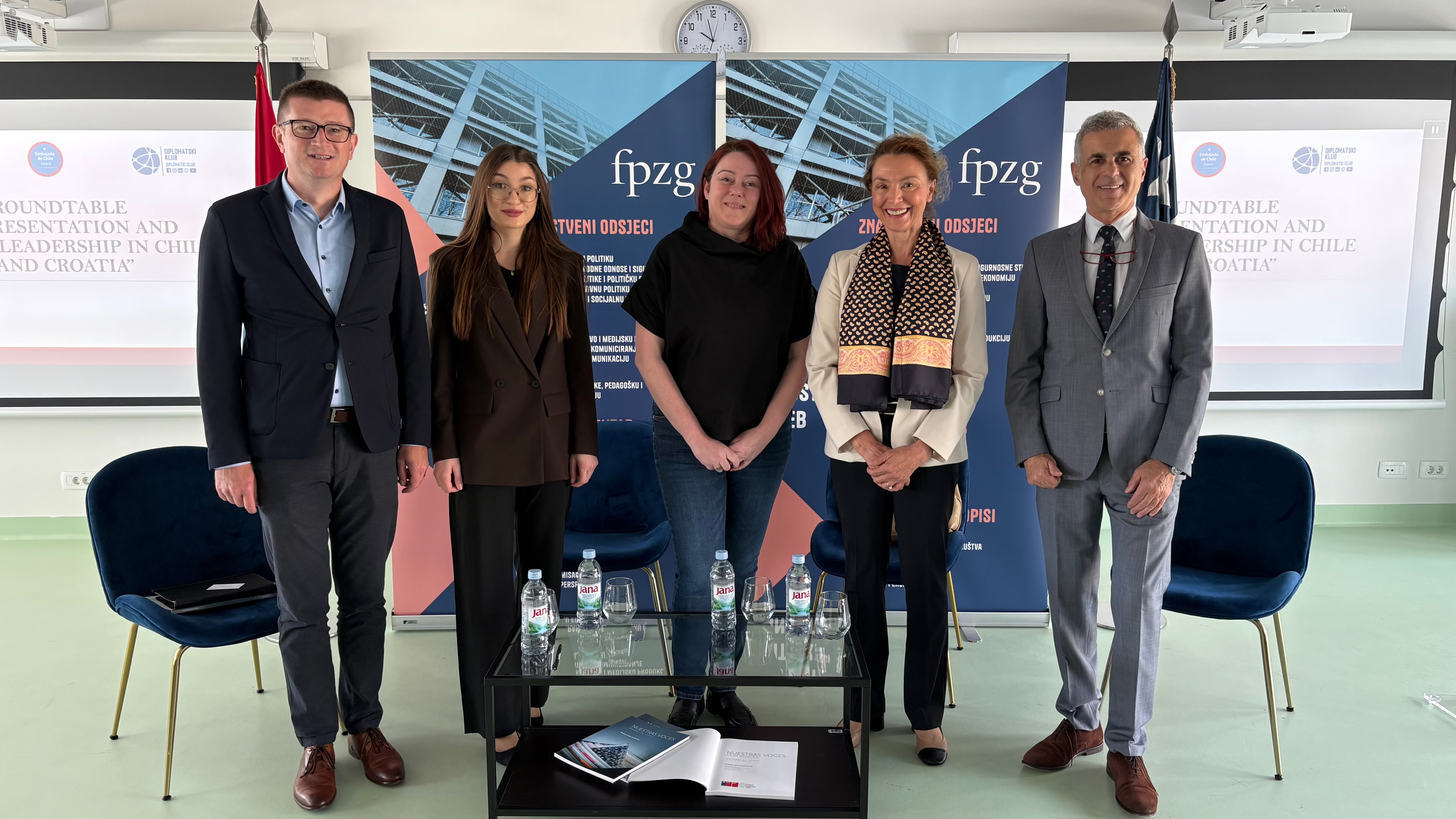
Dinamična i sveobuhvatna diskusija pokazala je napetost — ali i međuovisnost — između institucionalnih reformi i društvenih normi. Moderatorica okruglog stola, Nina Jerković oblikovala je program uz sudjelovanje gđe. Marije Pejčinović Burić koja je obnašala funkciju ministrice vanjskih i europskih poslova i glavne tajnice Vijeća Europe, doc. dr.sc. Marjete Šinko te Nj. E. g. Rodriga Donosa.
Rasprava je nastavljena kroz aktivno sudjelovanje studenata, čime je dodatno naglašena važnost akademskog prostora kao mjesta otvorenog, kritičkog i međugeneracijskog dijaloga o društvenim promjenama. Vizualnu interpretaciju teme zastupljenosti i rodnih odnosa, dodatno je obogatila izložba poznate fotografkinje Viviane Urre.
Događaj je zaključen obraćanjem prof. dr. sc. Lidije Kos-Stanišić uz naglasak na važnost kontinuirane suradnje između akademskih i diplomatskih aktera, a kvaliteta programa potvrdila je kako dijalog između Hrvatske i Čilea nadilazi razmjenu iskustava i predstavlja zajedničko ulaganje u demokratske modele koji prepoznaju da uključivost ne samo kao posljedicu kvalitetnog upravljanja već kao njezin preduvjet.
ROUNDTABLE DISCUSSION
“REPRESENTATION AND FEMALE LEADERSHIP IN CHILE AND CROATIA”
05/05/2026
Faculty of Political Science
On 5 May 2026, the Faculty of Political Science at the University of Zagreb hosted a roundtable discussion entitled “Representation and Female Leadership in Chile and Croatia”, conceived as a platform for bringing together academic reflection and diplomatic dialogue on women’s political leadership as a key dimension of contemporary democracy.
The event was opened by the Dean of the Faculty, Prof. Dario Nikić Čakar, PhD, who emphasized the importance of maintaining continuity in the organization of programmes that draw attention to relevant social and institutional issues. In his opening remarks, H.E. Rodrigo Donoso, Ambassador of Chile to the Republic of Croatia, stressed that the exchange of experiences between countries such as Chile and Croatia represents not merely a comparison of different contexts, but also a meaningful contribution to the critical reflection on effective and inclusive public policies.
The dynamic and comprehensive discussion highlighted both the tensions and the interdependence between institutional reforms and social norms. Moderated by Nina Jerković from the Diplomatic club, the roundtable featured contributions from Marija Pejčinović Burić, former Minister of Foreign and European Affairs of the Republic of Croatia and former Secretary General of the Council of Europe, Assistant Professor Marjeta Šinko, PhD, and H.E. Rodrigo Donoso.
The discussion continued with the active participation of students, further highlighting the role of the academic community in fostering open, critical, and intergenerational dialogue on social change.The visual interpretation of representation and gender relations was further enriched by an exhibition by the renowned photographer Viviana Urra.
The event concluded with remarks by Prof. Lidija Kos-Stanišić, PhD, who emphasized the importance of continued cooperation between academic and diplomatic actors. The quality of the programme confirmed that the dialogue between Croatia and Chile transcends the exchange of experiences and represents a shared investment in democratic models that recognize inclusiveness not merely as a consequence of good governance, but as a fundamental prerequisite for it.


